

Why a Garden Consultant!
Consider your garden consultant as your exterior decorator. Where to start? What to change? What to keep? The list can go on for acres. As your exterior decorator, I will offer a personalized co-creation of your specific needs. We will spend time looking at your yard and I will answer your questions offering a sustainable solution and or design. I treat the one hour consult as a educational class, building your confidence and avoiding costly mistakes. We will discover just how special your PLACE truly is.
Before I arrive I would like you to consider some questions I will ask when we meet,
What areas are you interested in improving? ( front , back , patio etc)
How do you want to use your landscape? (play, vegetable garden cutting garden, fire pit etc)
Areas of concern. (slopes, drainage, etc)
I will follow up the visit with a summary and action report that will contain resources.
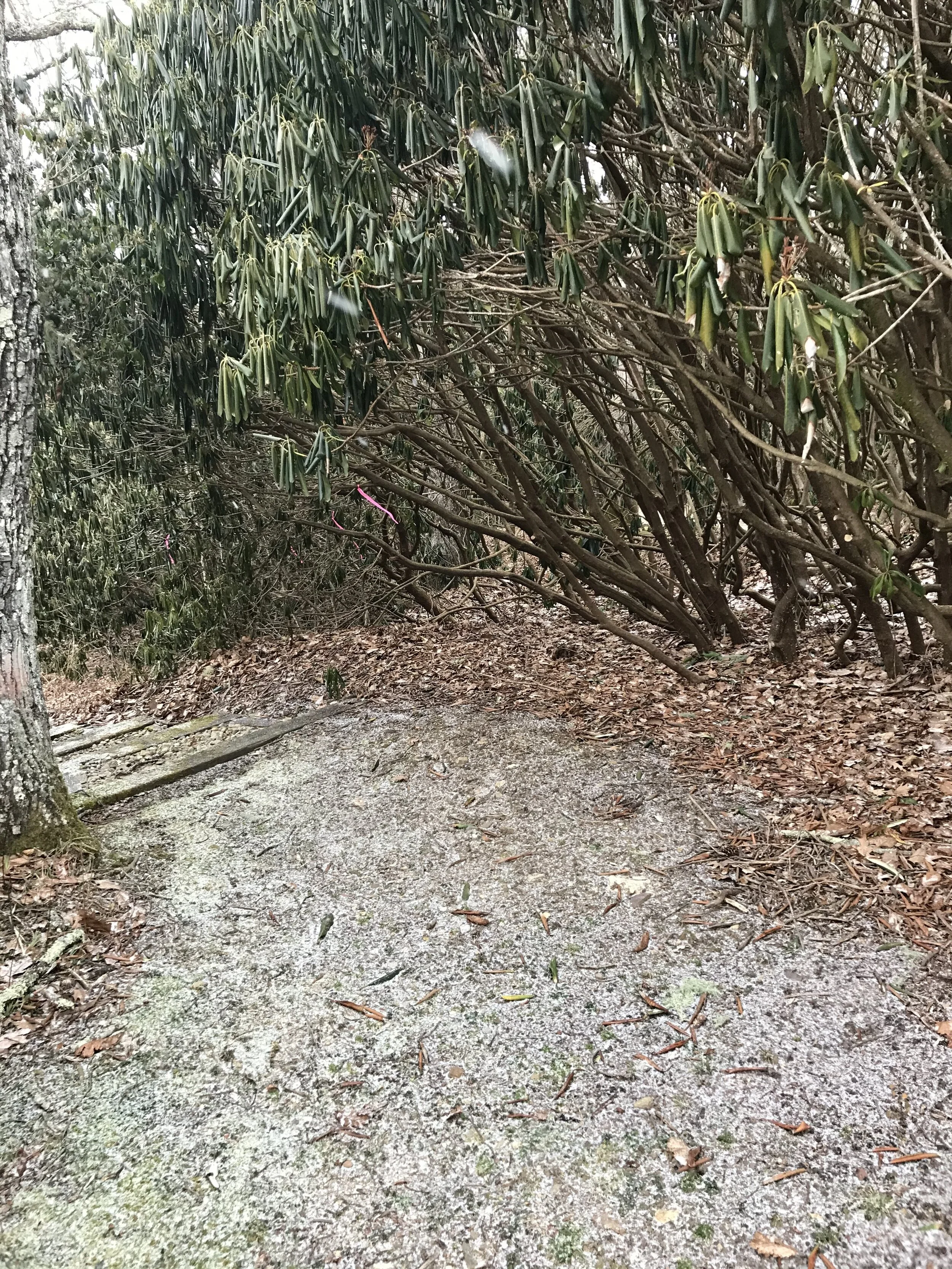
Horticultural Restoration: Pruning
Established landscapes can be so very lovely and so very intimidating. Often we do not realize that our plant material is overgrown and screaming for help. Pruning is an art and I am on a mission to help the gardener/homeowner understand the value of “pruning for health”. The condition of the supporting soil is equally important to the health of the plant.
Restoring a plant to become healthier and sustainable for seasons to come can take a number of pruning over a period of seasons. Neglected plant material generally looses shape with growing occurring on the outer edges preventing any new growth underneath. Proper pruning, consistently scheduled, increases the life expectancy and beauty of the plant.
There are two types of restorative pruning; rejuvenating and renewal.
Rejuvenation pruning is a more radical form of pruning used when the shrubs are overgrown, ugly, dying out in the center and experiencing reduced flowering. This type of pruning should be done in the early spring prior to the emergence of new growth and only done when needed. Note: if the plant flowers early this pruning may be delayed until bloom is finished.
Renewal pruning is less drastic and takes place over the course of 2-3 seasons. Each year about 1/3 of the stems are cut out thus allowing in more light and air.
Once the plant material has been pruned, it may enter into shock. A bit of TLC is required. Proper watering, using good organic fertilizer, adding compost is the best method to ensure prosperity.
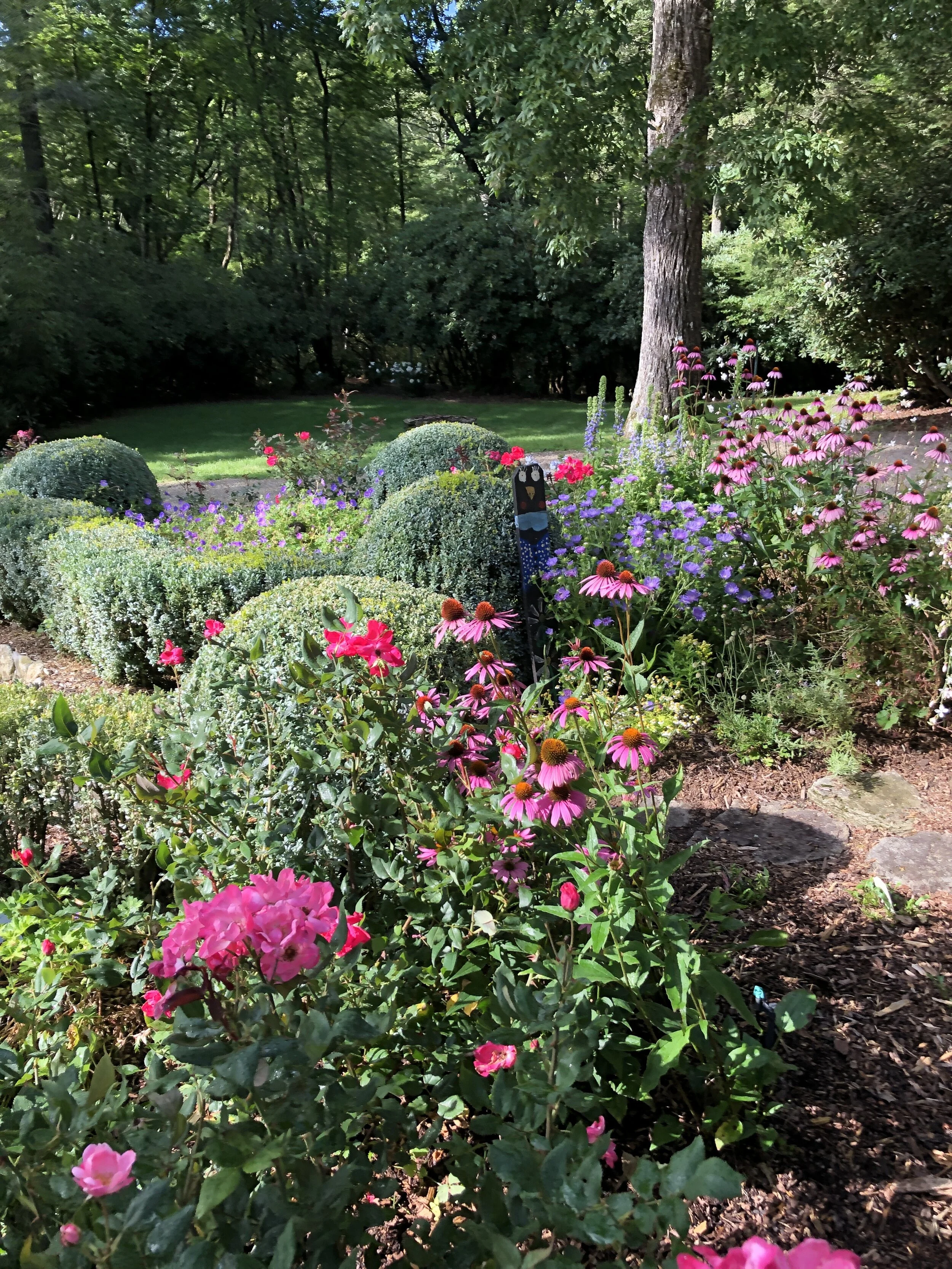
The Mountain Cottage Garden
Gardeners, by definition, are community builders. They actually love to share their knowledge as we can learn from history. In 1883, William Robinson, published The English Flower Garden. His goal was to leave gardening” to each gardener’s individual imagination”. Robinson was also friends with Gertrude Jekell, another influencer of the English garden. Together, these two gardeners, writers, and artists imagined a less formal way to garden, “WILD”.
Guided by the philosophies of these two renowned gardeners, along with my horticultural training and general experience, allow me to present the idea of the North Carolina Mountain Cottage Garden. These garden design ideas stem from the English country garden and the herbaceous flower border.
The historical cottage garden was a practical garden. A mixture of fruits, flowers, herbs, vegetables and livestock - though maybe we leave the chickens alone for now. Nature was mirrored in these charming useful gardens. As in nature, the wide variety of plant material was a profusion of interplanted, layered plants. Curved pathways were both useful and pleasant. Benches, fences, pots, birdbaths, arbors, gates were always used in some functional fashion. These fragrant and colorful gardens always looked as if they merely planted themselves.
In and around the Highlands, North Carolina, we are fortunate to garden in the Appalachian temperate rain forest which is the most biodiverse in the world. For more information on our unique and special area, you can visit this website: www.worldwildlife.org/ecoregions/na0403
Highlands provides the luxury of plenty of moisture, healthy soil, and a cool and mild climate. This region supports some beautiful native flora which we can use in our mountain cottage gardens. So, let’s get WILD!!!
If you want to build a garden or just want more information, please reach out at my email below or through my website. I would love to hear from you!
ldailey13@msn.com

Place; How We Miss It
“Is it not possible that a place could have huge affection for those who dwell there? Perhaps your place loves having you there. It misses you when you are away and in its secret way rejoices when you return. Could it be possible that a landscape might have a deep friendship with you? That it could sense your presence and feel the care you extend towards it? Perhaps your favorite place feels proud of you.”
― John O'Donohue, Divine Beauty: The Invisible Embrace
How do you define your Place. I define my Place as my healing sanctuary. The garden is my place and I define the garden as God’s gift of nature surrounding me. Where can you go to lose yourself for a long moment or two? Where you can actually hear yourself breathe. Where creativity is going to germinate anyway. Where you just might be able to feel the love of those that have left this world. Where you can play with the new generation. I could go on and on……. A sense of Place is so very important to all of us.
So, as we begin to anticipate returning to our Places, I know that we will never look at them in the same way.
Our gardens are waiting for us to return and with that return they will bless us with the hope of tomorrow. We will be able to work the soil, sow the seeds, plant the perennials and bask in the fruit of our labor. I suggest that all of us rest now because we will be digging soon.

Foraging - The Art of
Foraging by definition is searching for a wild food source. The idea of searching for and finding sustenance in the wild is natural. With this definition in mind, foraging for food for our creative senses is truly a exciting adventure. Seasonal, botanical, clean, unexpected define the art of floral foraging. Train your eye, take a centering breath, and embrace the moment where you are! You know,” garden yoga”. Each season brings foraging opportunities galore. Every growth stage of a plant is useful; the seed, the pods, the leaves, the bark, the flowers back to the seed.
The art of foraging can be cultivated. Many tools are useful, whether it is a trowel, clippers or a camera. A friend of mine, Carol Stewart, takes foraging to the next level in two forms. Carol is one of the most gifted amature photographers I have met. She is an artist who is able to capture nature in remarkable forms. The way Carol captures dogs, pheasants, to flora is stunning. Foraging with a camera is just one of Carols tools.
Carol has another form of foraging in her arsenal. Imagine nature preserved!!! Carol is the classic southern hostess and of course guest. She has taken the hostess gift to another level. Her gifts are personal, creative, foraged and stunning. Camera and clippers in hand, Carol forages in the woods, gardens, roadsides for the perfect plant specimen to capture. The foraged prize is presented in a classic, unique fashion. Carol presses the foraged find and secures it within a simple black frame upon white matte. The specimen is dated and identified then signed by this amazing artist. These treasured foraged botanicals grace homes from Birmingham, to Savannah, to Highlands. Oh, the fortunate hostess who has been given a Carol Stewart foraged original.
Remember, we all have opportunities to enjoy the gifts of nature.

Cultivating a Garden: Seeds of Diversity
“Knowledge is like a garden, if not cultivated it cannot be harvested.” unknown
DID YOU KNOW!
75% of the global food diversity has become extinct in the last 100 years. Since the early 19 hundreds, millions of gardeners and farmers kept our many plant varieties alive. The ones we refer to as heirlooms. Since 1903, we have lost 93% of the vegetable varieties. Today we have maybe 250 seed companies and a few working with seed banks.
DID YOU KNOW!
In three states in the southeast, Georgia, South Carolina, and North Carolina, there are 1,100 big box stores with active garden centers. ie Home Depot, Lowes and Walmart. Generally speaking, the 4” bedding plant inventory of herbs, vegetables and flowers is supplied by the same large growers like Costa Farms. As a result, our choices of varieties are severely limited.
DID YOU KNOW!
We must explore the world of seeds. Seeds provide diversity that builds health into our ecosystems, allows for more varieties and the benefits that come with biodiversity. ……..More to come on this fun topic in another post.
DID YOU KNOW!
There ARE companies that provide the exciting world of seed varieties to us. Here are some of my favorites!
southernexposure.com, seedsavers.org, victoryseeds.com, sowtrueseed.com, rareseeds.com

Health of our Soil
Why?!?
It appears to me that we have an innate desire to duplicate the beauty and the bounty of nature. This beauty is in the eye of the gardener, be it a vegetable, a flower or a tree. As gardeners, we have taken plants out of their natural habitats to cultivate them, however we have not paid enough attention to the soil plants have co-evolved with over millions of years.
Now What ?!?
Time to understand and respect the value of living soil. I like to think of soil as the 5th element. Soil performs many essential functions like support of plant material , roads , our homes; creation of compost, (humus) , regulating and filtering of water flow, antibiotic producing bacteria.
One teaspoon of healthy soil can contain up to a billion micro-organisms from 25 thousand different species. These inhabitants of the soil are master de-composers of the organic matter into elements that then become available to the roots of plants. A symbiotic relationship.
What should we do?!
FEED THE SOIL!! Allow nature to regenerate. Organic matter, organic matter, and more organic matter! Adopt a no-till practice. Use only organic fertilizers, pesticides and herbicides . Composting is our way of speeding up the soil’s naturally occurring humus, “the life course of soil.”